
Forklift Rental Delivery Checklist: What Your Site Needs Before the Truck Arrives
Written by a Thompson Lift Truck Forklift Expert • Updated February 17, 2026
Quick Facts: Forklift Rental Delivery Prep
- Most failed or delayed forklift deliveries are caused by access, surface, or clearance issues, not the forklift itself.
- Floor condition and weight limits matter more than most people expect
- Charging, fuel, and battery readiness are often overlooked until delivery day
- A short site check before delivery can prevent a full reschedule
- Thompson Lift Truck helps customers spot these issues early so rentals arrive ready to work
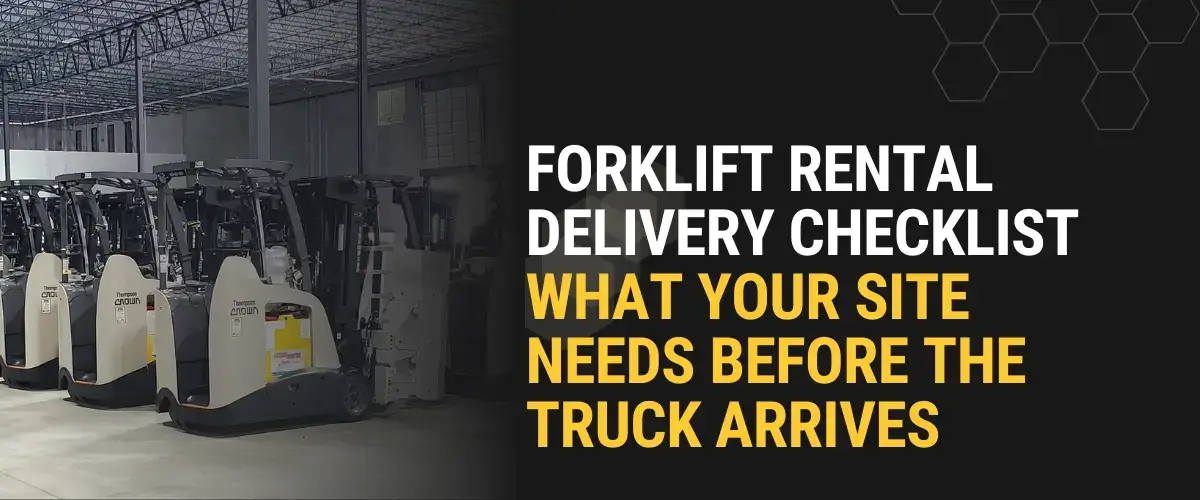
Preparing for a Forklift Rental Delivery?
Forklift rental problems usually start before the forklift ever shows up.
Most delays, reschedules, and “we can’t drop this yet” moments come down to small site issues, access, floor conditions, charging, or simple miscommunication. None of them feel like a big deal on their own, but they can cost you a full day of work when a delivery has to turn around.
This checklist walks through what actually matters before a forklift rental arrives. It’s not paperwork-heavy, and it’s not theoretical. These are the things that keep deliveries smooth and get the truck working the same day it hits your site.
1) Confirm access for the delivery truck, not just the forklift
It’s easy to think about aisle width and forget the delivery vehicle entirely.
Before delivery day, confirm:
- Clear access for a flatbed or rollback truck
- Turning space at gates, docks, or tight entrances
- No low-hanging wires, signs, or tree limbs near the drop zone
- Ground conditions that can support the delivery truck’s weight
If a truck can’t safely enter or unload, the forklift won’t come off. This is one of the most common causes of same-day delays, especially on construction sites or temporary yards.
If access is tight or unusual, flag it early. Photos help. So does a quick conversation before the truck is dispatched.
2) Check floor conditions and weight limits (this matters more than people think)
Forklifts are heavy, even before they pick anything up.
Make sure:
- Floors can support the forklift’s weight plus the load
- Temporary flooring, ramps, or dock plates are rated correctly
- Outdoor surfaces are stable, especially after rain
- There are no soft spots, broken concrete, or severe slopes
If a forklift sinks, slips, or damages the surface, it’s a safety issue, not just a repair issue. A quick walk-through of the working area ahead of time can prevent that entirely.
If you’re unsure, ask. This is exactly the kind of thing a rental provider wants to review before delivery, not after.
3) Verify clearance, aisle width, and door heights
A forklift that fits on paper can still be wrong for the space.
Before delivery, confirm:
- Door heights, including roll-up doors and dock doors
- Aisle widths in the actual working area, not just the main aisle
- Overhead obstructions like sprinklers, lighting, or beams
- Rack height and load placement zones
This is especially important for indoor rentals, narrow aisles, and high-mast trucks. A forklift that technically “fits” but forces constant adjustments slows everything down and increases risk.
4) Get power, charging, or fuel sorted before the truck arrives
This one gets missed all the time.
For electric forklifts:
- Confirm charger type, voltage, and plug compatibility
- Make sure charging space is clear and accessible
- Ensure electrical access is ready and approved
For internal combustion forklifts:
- Confirm fuel type (propane, diesel, gasoline)
- Make sure cylinders or fuel access are available on site
A forklift should be able to go to work immediately after delivery. If charging or fueling becomes a scramble, you lose the first shift, sometimes more.
5) Plan a safe drop zone and initial setup space
Delivery doesn’t end when the forklift touches the ground.
Make sure:
- The drop zone is clear of foot traffic and obstacles
- There’s room for inspection and basic setup
- Operators know where the forklift will be staged
- Safety cones or barriers are available if needed
A rushed or crowded drop-off increases the chance of damage before the forklift even starts working. A calm, clear setup saves time and avoids unnecessary issues.
6) Confirm who’s receiving the forklift and signing paperwork
Deliveries slow down fast when no one is clearly in charge.
Before delivery:
- Assign a site contact who will be present
- Make sure they understand what’s being delivered
- Confirm who signs off on condition and placement
- Share contact info with the delivery team in advance
This avoids last-minute phone calls, waiting periods, and confusion about responsibility.
7) Walk through first-use expectations with operators
A rental forklift may not behave exactly like your owned equipment.
Before the first shift:
- Review controls and basic operation
- Confirm load limits and attachment use
- Flag any differences from your usual trucks
- Encourage operators to report issues early, not push through them
A five-minute conversation here prevents misuse, damage, and downtime later.
What usually causes forklift rental delivery problems
If you want a short list of the most common issues Thompson Lift Truck sees, it’s this:
- Access wasn’t checked for the delivery truck
- Floors or ramps couldn’t support the weight
- Charging or fuel wasn’t ready
- Clearance issues were discovered too late
- No clear site contact was available
None of these are complicated, but all of them can stop a delivery cold.
A simple way to avoid delays
If you’re renting a forklift, do this a few days before delivery:
- Walk the site with this checklist in hand
- Take photos of any tight or questionable areas
- Share them with your rental provider
- Confirm access, power, and setup details
That short step saves more time than any last-minute fix on delivery day.
Get your forklift rental delivered and working on day one
Forklift rentals should solve problems, not create new ones. With a little preparation, most delivery issues never happen.
If you’re planning a forklift rental and want help confirming your site is ready, contact Thompson Lift Truck. We’ll help you review access, surfaces, power, and setup so your rental arrives ready to work, not ready to be rescheduled.
FAQs: Forklift Rental Delivery Preparation
What needs to be ready before a forklift rental is delivered?
Before delivery, your site should have clear access for the delivery truck, stable ground or flooring, enough clearance for the forklift, and power or fuel ready so the equipment can be used immediately.
Why would a forklift rental delivery be delayed or turned away?
Forklift deliveries are usually delayed due to access restrictions, weak or uneven surfaces, low door clearance, or charging and fuel not being prepared ahead of time.
Does the delivery truck need special access for a forklift rental?
Yes. The delivery truck needs enough space to enter, turn, and unload safely. Tight gates, low clearance, soft ground, or blocked drop zones can prevent unloading even if the forklift itself fits the site.
Can a forklift rental be delivered if my site isn’t fully prepared yet?
If the site isn’t safe or accessible at delivery, the forklift may need to be rescheduled. Confirming access, surfaces, and setup in advance helps avoid delays and lost work time.
How does Thompson Lift Truck help prevent forklift rental delivery issues?
Thompson Lift Truck works with customers before delivery to review access, surface conditions, clearance, and power or fuel requirements so forklifts arrive ready to work instead of being delayed or rescheduled.