
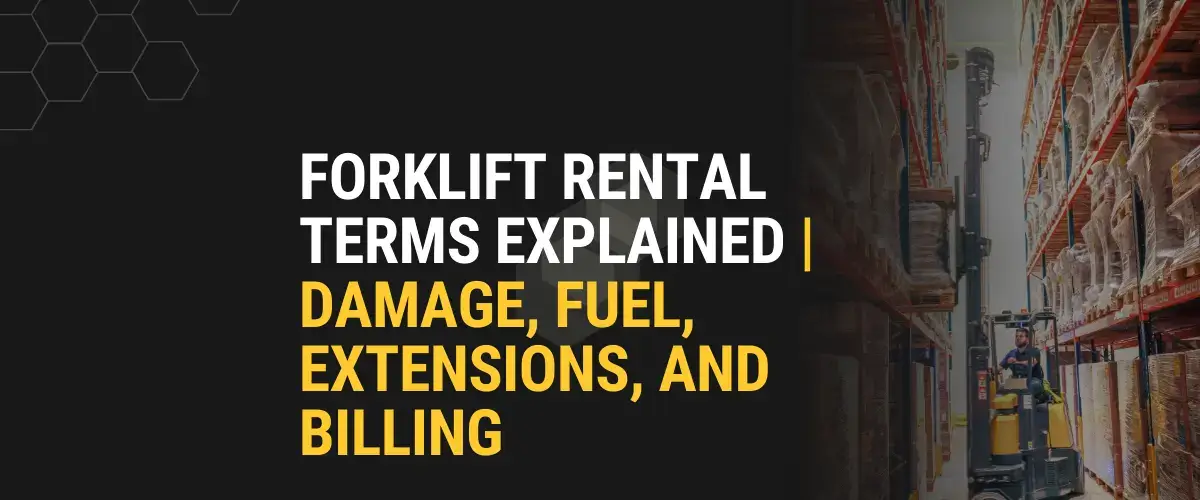
Forklift Rental Terms Explained: Damage, Fuel, Extensions, and Billing
Written by a Thompson Lift Truck Forklift Expert • Updated February 27, 2026
Quick Facts: Forklift Rental Terms
- Rental terms are designed to cover normal use, not misuse or avoidable damage
- Normal wear refers to minor cosmetic marks or wear that occur during proper, everyday forklift use
- Fuel and charging responsibility depends on forklift type and agreed rental terms
- Rental extensions allow you to keep equipment longer than planned when arranged in advance. Rental extensions are common and usually easy when planned early
- Billing periods are usually based on daily, weekly, or monthly rental rates rather than hourly use
Questions About Forklift Rental Terms?
Forklift rental agreements are usually straightforward, but the confusion starts when something unexpected happens.
A scratch shows up, or maybe Fuel runs low. A job takes longer than planned. An invoice looks different than expected. None of these things are unusual, but if you don’t know how rental terms work, they can feel frustrating or expensive.
This guide breaks down the rental terms customers ask about most: damage, fuel, extensions, and billing, in plain language. No legal talk. Just what actually matters when you’re renting a forklift and trying to keep work moving.
What “normal wear” actually means for forklift rentals
Normal wear happens when a forklift is used as intended.
This includes:
- Minor tire wear
- Cosmetic scuffs from regular operation
- Gradual performance changes tied to normal use
Damage is different. Damage usually involves impacts, misuse, or operating outside recommended conditions. Examples include bent forks, broken lights, cracked components, or damage caused by improper loading.
The key thing to remember is that rental forklifts are inspected before and after use. If something looks off at delivery, flag it immediately. That protects everyone and keeps expectations clear.
How forklift rental damage is typically handled
If damage happens during a rental, it doesn’t automatically mean a worst-case scenario.
What matters most is:
- What happened
- When it happened
- Whether it was reported promptly
Small issues caught early are often easier to address than problems discovered at return. Continuing to operate damaged equipment can turn a minor issue into a bigger one.
The safest approach is simple: if something doesn’t feel right, stop and report it. That usually saves time, money, and frustration.
Fuel and charging, what renters often overlook
Fuel and charging expectations depend entirely on the type of forklift you rent.
For electric forklifts, this means:
- Using the correct charger
- Following basic charging guidelines
- Avoiding habits that shorten battery life
For propane, diesel, or gas forklifts, this usually means:
- Keeping fuel at appropriate levels
- Using the correct fuel type
- Returning equipment in expected condition
Fuel policies aren’t meant to be tricky. They exist so the next customer receives equipment that’s ready to work and so batteries and engines stay healthy.
What happens if you need a rental forklift longer than planned
Rental extensions are common because jobs change and schedules don’t always go as planned. That part is normal. What matters most is timing. If you know you’ll need the forklift longer than expected, communicating that early helps avoid availability issues, keeps pricing predictable, and prevents last-minute scrambling. In most cases, extending a rental is far smoother than returning the forklift and trying to re-rent it later.
Early returns and schedule changes
Sometimes the opposite happens. The job finishes early.
In those cases, let your rental provider know. Early communication helps coordinate pickup and billing adjustments where applicable. Even if plans change quickly, a short heads-up goes a long way.
How forklift rental billing usually works
Forklift rentals are typically billed by:
- Day
- Week
- Month
Hourly rentals are uncommon because forklifts are working assets meant to support full shifts. Daily and weekly rates are structured to reflect realistic job use, not just engine hours.
Invoices usually include:
- Rental period
- Equipment type
- Any approved extensions
- Any documented damage or service issues
If something doesn’t look right, ask. Most billing questions come down to timing, communication, or assumptions that were never confirmed upfront.
Why clear expectations matter more than fine print
Most forklift rental issues don’t come from bad intent. They come from assumptions.
Assumptions about:
- How damage is defined
- Who handles fuel or charging
- How long the rental will really last
- When billing periods reset
Asking questions before delivery and during the rental keeps everything predictable and avoids stress when the forklift goes back.
A simple way to avoid rental surprises
Before your rental starts, confirm:
- What counts as normal wear vs damage
- Fuel or charging expectations
- How extensions are handled
- How billing periods are structured
That five-minute conversation is usually all it takes to keep a rental smooth from start to finish.
Rent with clarity, not guesswork
Forklift rentals should make work easier, not create uncertainty. When expectations are clear, rentals stay flexible, costs stay predictable, and jobs stay on schedule.
If you have questions about forklift rental terms or want to make sure everything is clear before you rent, contact Thompson Lift Truck. We’ll walk through the details so you know exactly what to expect before the forklift ever arrives.
FAQs: Forklift Rental Terms Explained
What counts as damage on a forklift rental?
Damage usually refers to impacts, misuse, or operating the forklift outside recommended conditions, such as bent forks or broken components. Thompson Lift Truck reviews equipment condition before and after each rental to clearly distinguish damage from normal wear.
Who is responsible for fuel or charging during a forklift rental?
Fuel or charging responsibility depends on the forklift type and rental agreement. Thompson Lift Truck explains fueling and charging expectations upfront so renters know exactly what’s required during use.
Can I extend a forklift rental if my job takes longer than planned?
Yes. Forklift rental extensions are common when arranged in advance. Thompson Lift Truck works with customers to extend rentals early when schedules change, helping avoid availability issues and unexpected costs.
How is forklift rental billing usually structured?
Forklift rentals are typically billed by the day, week, or month rather than by the hour. Thompson Lift Truck reviews billing structure and rental periods before delivery so there are no surprises at invoicing.