
Forklifts That Keep Food & Beverage Operations Running Clean and Cold
Quick Facts
- Electric-powered trucks are the most popular indoor options, as they produce no harmful emissions near consumable items.
- Forklifts designed for freezers will remain operational at temperatures of -22°F and guard against condensation.
- Wash-down resistant trucks will come equipped with fully enclosed electrical systems, stainless steel parts, and safe hydraulic fluid.
- Narrow aisles and articulated models can maneuver through corridors measuring only 2 meters wide.
- Both OSHA 29 CFR 1910.178 regulations and FDA-sanctioned sanitization guidelines govern forklifts used in food facilities
A broken forklift does more than cause maintenance issues; it can stop a bottling line from operating, ruin an entire pallet of frozen items, or lead to an unscheduled sanitization inspection you never expected to take place this year. Food and beverage manufacturing facilities operate on thin margins, rigid sanitary guidelines, and non-negotiable timetables. The forklifts made for food and beverage applications have to do it all while also surviving freezing temperatures, repeated wash-down procedures, and narrow alleyways.
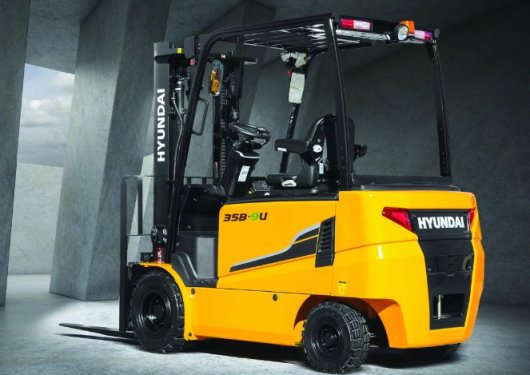
Unique requirements of food & beverage material handling
Food and beverage warehouses take their toll on your forklifts in ways you would never expect. You are juggling hygiene, temperature control, speed, and safety, and compromising any one of these costs big time.
- High standards of hygiene and sanitization: FDA, USDA, HACCP, and external auditors require contaminant-free, sanitary equipment in the immediate vicinity of food processing operations.
- Temperature extremes: Your forklift fleet has to operate from ambient dock conditions up to blast-freezing conditions of -10°F on the same day. Ordinary lift trucks would crack their seals and fog their temperature controls in such environments.
- Sensitive perishables: Dropping a load of yogurt or damaging a case of beer results in a total loss. Operator control is critical.
- Risks of contamination by the machinery: Brake dust, hydraulic fluid spills, and emissions are not permitted. Most internal combustion trucks can’t be used in these areas.
- Tight aisles: SKU count continues to rise, while warehouses continue getting smaller each year.
- Worker shortage: Employee turnover is high, so your forklifts have to be easy to train and operate.

How forklifts for the food and beverage industry support every stage of the supply chain
Each process in the supply chain of foods and beverages requires a different type of forklift. Operating an unsuitable forklift in a specific area would be the quickest way to burn through your maintenance budget.
Dock operations & inbound logistics
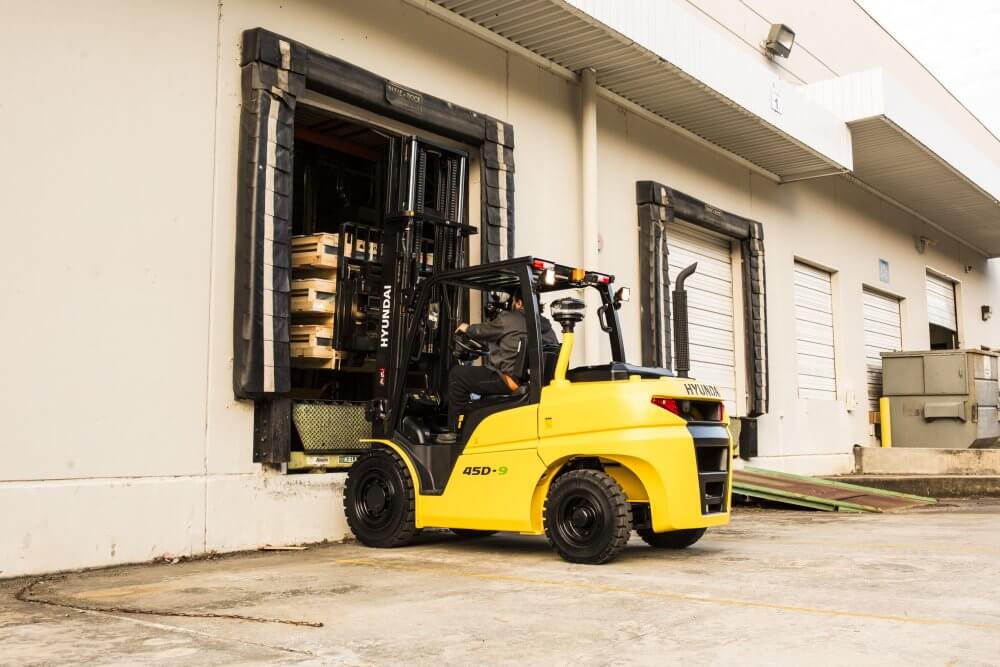
In the receiving docks, the speed and performance of dock plates are the primary considerations. The operation of electric counterbalances and electric pallet jacks is dominant when it comes to trailer unloading tasks. Low clearance forklifts are the best fit for quick operation under pallet loads, while sealed electrical components make electric trucks ideal due to the high levels of moisture and fluctuating temperatures on the docks.
Support of production lines
Within manufacturing plants, the forklifts assist with the transport of bulk materials, totes, drums, and kegs for processing and packaging. Forklifts used in the food processing plant must be equipped with a wash-down capability, food-grade hydraulic fluid, and non-marking tires.
Cold storage & freezer environments
Freezer operations are unique. Forklifts working in freezing environments employ insulated cabs, heated seats, cold-tolerant hydraulic oil, and moisture-proofed electrical components that prevent condensation from destroying the truck. Lithium-ion battery technology provides superior voltage retention compared to lead-acid in sub-freezing conditions, and most new cold storage trucks have switched to lithium.
Warehouse storage & narrow aisle operations
In the high-bay warehouse, storage efficiency is key. Reach trucks, order pickers, and articulated forklift trucks accommodate push-back and drive-in racking structures and narrow down aisle widths. Multi-directional trucks are capable of moving large SKUs, such as concentrate juice pallets or multiple cases of beer, through 2-meter-wide aisles without incident.
Outbound logistics & loading
During shipping, efficiency is paramount. Electric stand-up rider trucks and double pallet jack forks load shipping containers and stack mixed SKU pallets for food and beverage shipments. Fleet telematics on each individual truck monitors operator performance, impact incidents, and battery status so fleet managers know when to move shipping containers.



Request your forklift today
Why food & beverage operators choose Thompson Lift Truck
Thompson Lift Truck is a division of Thompson Tractor, operating in the Southeast since 1968 in Alabama, Florida, Georgia, Mississippi, Tennessee, South Carolina, and Kentucky. We offer Crown, Hyundai, Combilift, Kalmar, and Shuttlewagon brands, which means we are able to specify the correct equipment for all zones of your facility, whether it’s an electric truck in your wash-down area in your dairy or an articulated lift truck in a narrow aisle beverage warehouse.
Our food and beverage customers can take advantage of factory-trained mobile service to ensure continuous operation of their production lines, full-fleet rentals for peak seasons, OSHA-certified operator training, and locally stocked parts throughout our regional network of branches.

A local dealer with sixty years of experience
Thompson Lift Trucks is a company owned by Thompson Tractor, a group of family companies that have been operating in the Southeast for well over six decades. Our lift truck division runs branches in the states of Alabama, Florida, Georgia, Mississippi, Tennessee, South Carolina, and Kentucky.
Our company provides support all throughout the life cycle of your equipment, from initial specification, buying, operator training, maintenance, repair, and parts supply. All of our technicians are trained in the factory of the brands that we sell, and all parts we provide are locally available to reduce time. Forestry businesses working in difficult conditions far away from civilization will find our regional network of dealerships useful for minimizing equipment downtime.
Apart from selling equipment, we provide forklifts second-hand, short/long-term rentals, financing, fleet management, fluid analysis, and OSHA compliance operator training programs.
Keep Your Line Running With the Right Forklift
Thompson Lift Truck specs wash-down electrics, freezer-rated lifts, and narrow-aisle trucks for breweries, bottlers, dairies, frozen food processors, and grocery distributors. New sales, rentals, service, and OSHA-compliant operator training, all in one place.
Contact us for a free load survey, a demo at your facility, or a quote on the right truck for your operation.
FAQs: Forklifts for Food & Beverage Operations
Are electric forklifts safe to use around exposed food products?
Yes. Electric forklifts produce no exhaust emissions and no brake pad dust when spec’d with fully electric brakes, which makes them the standard choice for food processing zones. Thompson Lift Truck can spec food-safe electric models with non-marking tires and NSF H1 hydraulic oil.
What is the best forklift for a freezer warehouse?
A freezer warehouse needs an electric forklift with a heated cab, sealed electronics, freezer-rated hydraulic fluid, and ideally a lithium-ion battery that holds voltage in sub-zero temperatures. Our team sizes cold storage trucks based on your temperature range, shift schedule, and rack layout.
Do I need a special forklift for a brewery?
Breweries need forklifts that handle wet floors, kegs, full pallets of cans or bottles, and sometimes explosive atmosphere zones near CO2 lines. Brewery forklifts are almost always electric counterbalance models with wash-down protection. Thompson Lift Truck stocks brewery-ready trucks and can arrange demos at your taproom or production site.
What capacity forklift do I need for a beverage distribution center?
Most beverage distribution centers run forklifts in the 3,000 to 6,000 lb capacity range for pallet work and order pickers for case picking. Larger bottlers and breweries sometimes need 8,000 to 12,000 lb trucks for double-stacked loads. We can run a free load survey to recommend the right mix for your facility.
Can I rent forklifts for seasonal food production peaks?
Yes. Short-term and seasonal rentals are common in food and beverage, especially for holiday production runs and summer beverage peaks. Thompson Lift Truck offers daily, weekly, monthly, and long-term rentals with full maintenance included.
What OSHA rules apply to forklifts in food plants?
OSHA 29 CFR 1910.178 covers all powered industrial trucks and requires formal operator training, daily pre-shift inspections, and refresher training every three years or after any incident. We provide OSHA-compliant operator training both onsite and at our training facility.
How often should food and beverage forklifts be serviced?
Planned maintenance is usually recommended every 200 to 250 operating hours, with more frequent inspections for freezer and wash-down trucks due to harsher conditions. Thompson Lift Truck has service plans that are built around OEM intervals and flag wear early to prevent production downtime.