
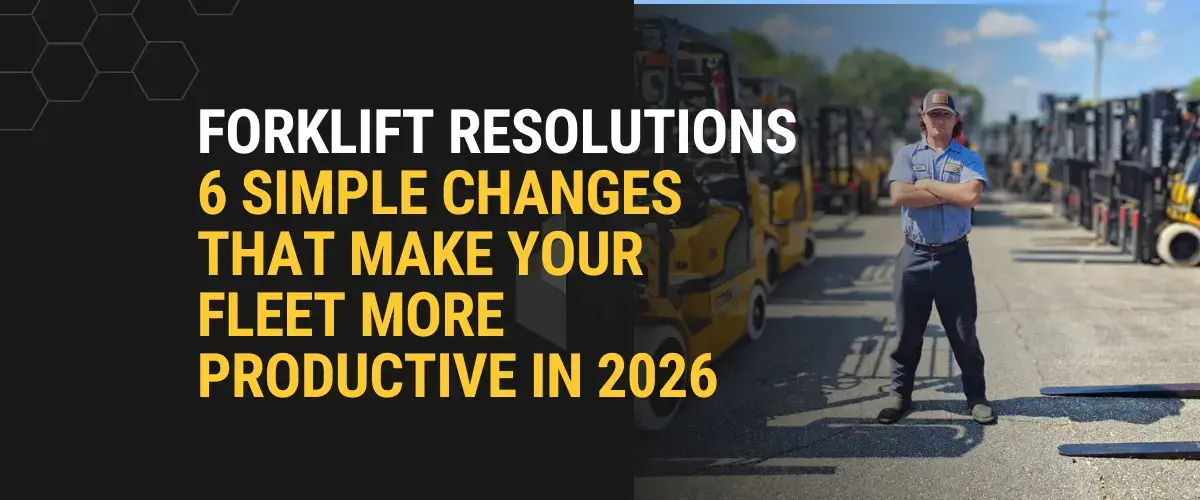
Forklift Resolutions: 6 Simple Changes That Make Your Fleet More Productive in 2026
Written by a Thompson Lift Truck Forklift Expert • Updated January 15, 2026
Quick Facts: Forklift Productivity Tips for 2026
- Most forklift downtime starts as a small issue: a leak, a worn tire, a weak battery, a loose chain. Catch it early, and you avoid the bigger bill later.
- Productivity” is not just speed; it is fewer delays, fewer re-handles, and fewer damaged pallets.
- A short pre-shift routine beats a long end-of-month scramble.
- The right maintenance cadence keeps performance consistent and extends equipment life.
- Thompson Lift Truck can help you spot the biggest bottlenecks quickly with a practical fleet check.
1) Make pre-shift checks a 3-minute habit (not a once-in-a-while task)
Pre-shift checks get skipped when they feel long or unclear. Keep it simple and you will actually get it done.
A quick routine most teams can stick to:
- Look for leaks under the truck
- Check forks for cracks or bends
- Check tires for chunking, flats, or uneven wear
- Listen for odd sounds on first startup
- Confirm lights, horn, and backup alarm work
The goal is not paperwork. It is catching the small stuff before it becomes downtime.
Real-world win: fewer “surprise” breakdowns mid-shift, and faster fixes because the issue is spotted earlier.
2) Tighten up charging and battery habits (especially if you run electric)
Electric trucks can feel “weak” for reasons that have nothing to do with the forklift itself. A lot of forklift performance improvement comes from better charging habits.
A few simple checks:
- Make sure chargers match the battery type and voltage
- Keep battery tops clean and dry
- Do not run batteries to the absolute bottom every day
- Avoid “opportunity charging” unless your battery and charging plan are built for it
If batteries are overheating, taking too long to charge, or dying early, it is usually a process issue you can fix.
Good question to ask your team: Are we charging the way the battery is designed to be charged, or just doing what is easiest in the moment?
3) Stop losing time to tire problems (match tires to your floors and workload)
Tires are one of the most common hidden productivity killers. When tires wear unevenly, trucks lose traction, steering feels sloppy, and operators slow down because the truck does not feel stable.
A few easy moves:
- Rotate inspections based on use; the busiest trucks get checked more often
- Replace tires before they are completely worn out, because performance drops before the tire “looks dead”
- Make sure the tire type fits the surface: cushion vs pneumatic, indoor vs mixed use
If you are seeing constant tire wear, it is worth zooming out. Floors, debris, turning habits, and load weight all play a role.
4) Train for “smooth” driving, not just “safe” driving
Most teams think of training as a safety box to check. But the best forklift operating best practices also protect the truck and speed up the workflow.
Small operator habits that improve efficiency:
- Smooth starts and stops (less product shifting, less wear on components)
- Controlled turning (protects tires and reduces tip risk)
- Keeping forks low while traveling (faster, safer movement)
- Squaring up to pallets instead of “nudging” into place
When operators drive smoothly, pallets get damaged less, loads stay stable, and trucks need fewer repairs.
If you want an easy productivity target for 2026, start here. It is one of the fastest ways to reduce wear and keep uptime high.
5) Treat maintenance like a calendar item, not an emergency
If maintenance only happens when something breaks, you will stay stuck in reactive mode. A planned approach is one of the best forklift efficiency tips out there, because it prevents downtime that you cannot schedule.
Two simple upgrades:
- Set a clear preventive maintenance schedule based on hours, usage, and environment (dusty, cold storage, heavy loads, etc.).
- Track recurring issues so you can fix root causes instead of repeating the same repair.
If you want to improve forklift uptime, this is where it starts. The best fleets have “boring” maintenance logs, and that is a good thing.
Helpful internal resources to link here:
- Forklift Service & Maintenance: https://thompsonlifttruck.com/product-support/service-and-maintenance/
- Forklift Parts: https://thompsonlifttruck.com/product-support/parts/
6) Fix the workflow bottleneck, not just the forklift
Sometimes the forklift is fine, but the process around it is not. That is when small changes make a big difference.
A few examples:
- If operators keep re-handling loads, you may need a better staging plan or racking adjustments
- If pallets are constantly misaligned, a sideshifter or fork positioner can save time
- If loads are non-standard, the right attachment can reduce damage and speed up handling
This is also where many fleets get the most ROI, because one smart change can reduce delays across the entire dock or aisle.
- Forklift Rentals (for peak season coverage and downtime backup): https://thompsonlifttruck.com/rentals/
What to do next (keep it simple)
If you want a practical plan for 2026, do this in order:
- Pick one habit from this list to start this week
- Assign an owner (shift lead, maintenance lead, fleet manager)
- Re-check results in 30 days, then add the next habit
The goal is steady improvement, not a big announcement that disappears by February.
Start the year strong. Schedule a 2026 forklift fleet check with Thompson Lift Truck. We’ll help you spot the biggest performance drains, and prioritize fixes that actually move the needle.
FAQs: Forklift Productivity Tips
What are the best forklift productivity tips for a busy warehouse?
Start with pre-shift checks, solid charging habits, and a planned maintenance schedule. Thompson Lift Truck can help you prioritize quick wins for your fleet.
How do I improve forklift uptime without buying new equipment?
Focus on preventive maintenance, tire checks, and operator habits that reduce wear. Thompson Lift Truck can help reduce surprise downtime with a practical service plan.
What causes forklift performance to drop over time?
Battery issues, tire wear, small leaks, and skipped maintenance are big ones. Thompson Lift Truck can inspect your fleet and flag problems early.
How often should forklifts get preventive maintenance?
It depends on hours, workload, and your environment, but it should follow a consistent schedule. Thompson Lift Truck can set a PM plan that fits your operation.
What is the fastest way to boost forklift efficiency in 2026?
Standardize one simple habit first, like a 3-minute pre-shift check or smoother driving training. Thompson Lift Truck can run a fleet check to find your biggest bottleneck.