

The Forklift Operator Survival Guide: Small Habits That Make Big Shifts Easier
Written by a Thompson Lift Truck Forklift Expert • Updated January 27, 2026
Quick Facts: Forklift Operator Tips
- Small operator habits can reduce fatigue and make forklift shifts feel smoother.
- Cab setup, seat position, and mirror placement matter more than most people think.
- Smooth driving saves your body and helps the forklift feel more responsive.
- The best routines are simple enough to repeat on busy days.
- Thompson Lift Truck can support operators with training and on-site coaching to make these habits stick.
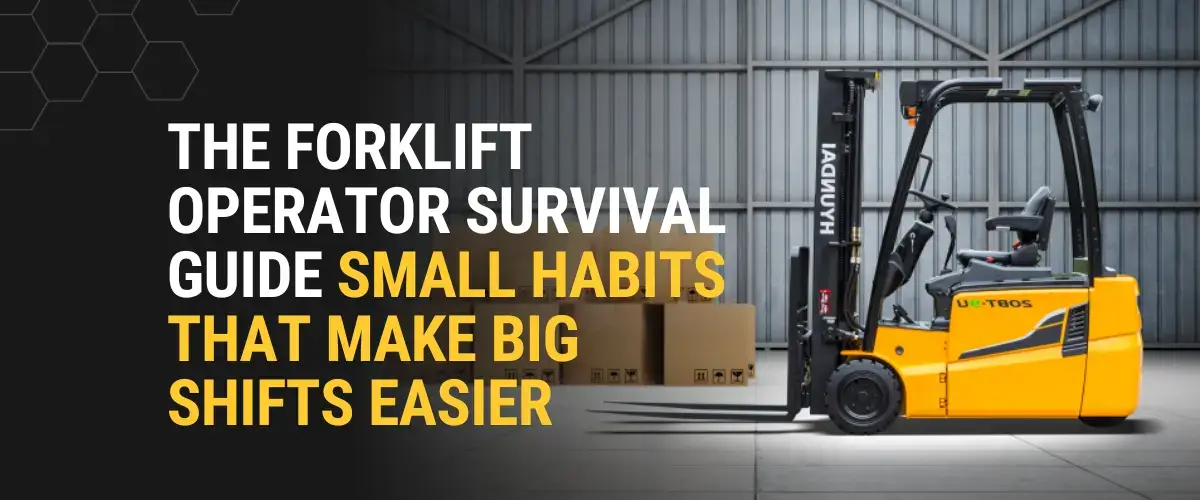
A forklift shift can start to feel long fast. Not because the work is hard (it is), but because the little things add up, stiff shoulders, a sore lower back, nonstop vibrations, and constant stop-and-go.
The good news is you don’t need a new truck to make a shift easier. You need a few small habits that protect your energy and help you stay comfortable, especially late in the day when most mistakes happen.
This guide is focused on forklift operator tips, comfort, and everyday routines. It’s not an OSHA training post. It’s the stuff operators actually talk about when the shift is over.
Start with a 60-second cab setup (it changes your whole day)
Most operators hop in and go, especially when the dock is backed up. But if your seat is wrong, your mirrors are off, or your steering position feels awkward, you’re basically choosing fatigue on purpose.
Here’s a fast setup that’s worth repeating every time you switch trucks:
- Seat distance: You should be able to press pedals without locking your knee.
- Back support: Sit upright, not slouched forward. Your shoulders should feel relaxed.
- Steering and arm position: If your arms feel “reached,” you’ll feel it in your neck by lunch.
- Mirrors: Set them so you don’t have to twist your torso just to see a corner.
- Floor space: Clear loose wrap, straps, or debris that forces your feet into weird angles.
This is one of the simplest forklift ergonomics tips out there, and it’s free.
Use “smooth is fast” driving to reduce forklift operator fatigue
A lot of operators get taught speed and urgency, not smoothness. But the body feels every hard stop and sharp turn, especially on rough floors.
If your goal is a smoother shift, try these habits:
Ease into starts and stops
Hard braking and quick takeoffs don’t just wear the truck, they wear you. Smooth transitions reduce vibration and help you stay steady in the seat.
Make turns wider when you can
Tight turns mean more steering effort and more upper-body tension. A slightly wider turn often feels easier and takes the same amount of time.
Stop “fighting” the floor
If your facility has uneven joints, dock plates, or rough yard areas, slow down just a touch before the rough section. Let the forklift roll through it instead of crashing through it.
These are small forklift shift tips, but they make the end of the day feel different.
Micro-breaks that don’t slow you down (but help a lot)
A break doesn’t have to mean leaving the floor for 15 minutes. A micro-break is 20 to 40 seconds, just enough to reset your body.
Try this a few times per shift:
- Stand up, roll your shoulders back, unclench your hands.
- Take a slow breath, then a second one.
- Stretch your neck gently side-to-side, nothing dramatic.
If you feel awkward doing it, do it while you wait for a pallet, a door, or a lane to clear. Nobody’s timing you, but your body is.
This is one of the most underrated ways to reduce forklift operator fatigue, especially in high-volume operations.
Fix the “small annoyances” that drain your energy
Operators don’t usually complain about one big thing. It’s the constant small stuff.
Here are a few that are worth fixing early:
If you’re constantly craning your neck
Check mirror placement, seat height, and your route. Sometimes the problem isn’t the forklift, it’s that you’re doing a twist 200 times a day.
If your hands feel sore or cramped
Lighten your grip. Most operators hold the wheel like they’re bracing for impact. A relaxed grip reduces hand fatigue and helps your shoulders stay loose.
If you feel every bump in your spine
Slow down slightly in rough zones and make sure your seat is set up correctly. If the truck feels unusually bouncy or harsh, it could be a tire, floor condition, or maintenance issue worth flagging.
Route habits that make the work feel easier
A shift feels harder when you’re doing extra mental work all day. If you can simplify your decisions, the job feels smoother.
A few habits that help:
- Plan one move ahead. Before you lift, know where you’re setting down.
- Park square. A crooked stop means a crooked pickup, then you fix it with extra steering and extra time.
- Keep a “clean lane” mindset. If your path is constantly blocked, that’s not just annoying, it adds stress and rushed decisions.
These are forklift operator best practices that make you feel less drained, even if your workload doesn’t change.
When to speak up (because the forklift might be the problem)
Sometimes fatigue isn’t your habits. It’s the truck.
If you notice any of these, say something early:
- The forklift feels rougher than usual on the same floor
- Steering feels stiff or uneven
- The seat won’t lock into a comfortable position
- Vibration feels worse than other trucks
- Controls feel “sticky” or inconsistent
A forklift that feels off can turn a normal shift into an exhausting one. That’s where service and support matters, because comfort issues often point to maintenance issues.
The easiest way to make these habits stick in 2026
New habits fail when they’re too complicated. The best operator routines are:
- quick
- repeatable
- easy to teach to someone else
If you want a simple place to start, pick just one of these changes for next week:
- Do the 60-second cab setup every shift
- Focus on smoother starts and stops
- Add 2-3 micro-breaks per shift
Once one change becomes normal, add the next.
We can help your team build simple habits that improve comfort, consistency, and day-to-day performance
FAQs: Forklift Operator Tips
What are the best forklift operator tips for a smoother shift?
Start with pre-shift checks, solid charging habits, and a planned maintenance schedule. Thompson Lift Truck can help you prioritize quick wins for your fleet.
How can forklift operators reduce fatigue during long shifts?
Focus on preventive maintenance, tire checks, and operator habits that reduce wear. Thompson Lift Truck can help reduce surprise downtime with a practical service plan.
How should I adjust my forklift seat for comfort?
Battery issues, tire wear, small leaks, and skipped maintenance are big ones. Thompson Lift Truck can inspect your fleet and flag problems early.
Can Thompson Lift Truck help improve operator comfort and consistency?
It depends on hours, workload, and your environment, but it should follow a consistent schedule. Thompson Lift Truck can set a PM plan that fits your operation.